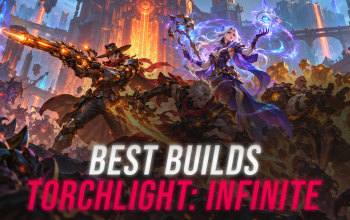
Torchlight Infinite Top Build Recommendations for Season 14
One season, ten very different ways to clear the Netherrealm. From fast attack builds to cold spellcasters and explosive summons.
Torchlight: Infinite Best Builds
Last Update: October 20, 2026
Introduction
Torchlight: Infinite has a Hero for nearly every kind of ARPG player. Some tear across maps with a volley of projectiles; others turn a single spell into a sustained assault or let their summons take charge. A satisfying build needs more than impressive damage. It should feel good across dozens of Netherrealm runs, when the novelty of a flashy skill has worn off.
Hero Traits can completely change the way a familiar character plays. Here we focus on one build for each featured Hero, explaining what makes it tick, how its main skill handles a fight and which upgrades deserve your currency. There are swift attackers, cold casters, unusual summoners and a few choices for players who enjoy managing a more intricate combat loop.
Season 14: Tartarus brings Youga's The Ultimate One trait, the Follower system and fresh combat adjustments. The Trade House is still finding its rhythm. Get the core build working and keep a little currency in reserve for the upgrades that truly matter.
Best Torchlight Infinite Builds
Ten Heroes, ten distinct ways to tackle Leptis. The entries cover the rhythm of each build, its core interactions and a practical route into the Netherrealm. Start with whichever playstyle catches your eye; the details below should help you decide whether it still sounds appealing.
Youga 3 · The Ultimate One · Caster · Spell Tangle
SpellcasterMobile mappingFlexible scaling
Youga brings his spells along for the ride. With The Ultimate One, a movable Clockwork Core carries his Spell Tangles through the battlefield, giving this caster an unusual sense of freedom. Packs gather, the Core follows, and a flurry of cold projectiles works through the crowd. That mobile setup is the real attraction of Youga's third Hero Trait.
Homing Frost Bolt handles the targeting, leaving you more room to think about movement and Core placement. During mapping, its seeking projectiles make messy pulls surprisingly comfortable. Bosses ask for a steadier hand: park the Core where it can keep dealing damage, read the next attack and reposition with purpose. The build has an approachable opening and a satisfying amount of finesse later on.
Main Skill & Mechanics: Homing Frost Bolt drives the damage. Spell Tangles and the Clockwork Core give it a mobile delivery system; your Hero Trait choices should strengthen that interaction.
Equipment Priorities: Cold spell damage, relevant projectile modifiers and cast speed provide the offensive base. Keep resistances and recovery healthy, then look at specialized Memories and Pactspirits once your ordinary gear is doing its job.
Recommended Progression: Level with a straightforward cold-projectile setup and settle into reliable Timemark 7 clears. From there, build around the Core's damage delivery and your chosen Spell Tangle supports. Check that every expensive upgrade actually benefits this version of Homing Frost Bolt.
Why Play It: Spells that move with the fight, forgiving targeting and room to master the Core.
Keep in Mind: Core placement takes practice, and fashionable upgrades can command a steep price.
Cat's Eye Erika - Corrosive Throw Wind Stalker
Erika 1 · Wind Stalker · Attack · Fast mapping
High mobilityAttack buildFlexible starter
Wind Stalker gives Erika a brisk, almost breathless pace. Corrosive Throw suits that style beautifully: fire into a pack, sweep across the screen and reach the next group before the last one has finished falling. Her appeal is easy to understand during a farming session. The attacks feel immediate, the movement rarely stops and the early equipment requirements are manageable.
That speed comes with responsibility. Erika needs space to keep attacking, and a poorly timed dash can put her right where the next hit lands. Learn the range of Corrosive Throw, maintain the buffs that matter to your setup and give your defenses some attention as Timemarks climb. With a good weapon, short maps become her playground; with flimsy gear, tougher enemies quickly expose every mistake.
Main Skill & Mechanics: Corrosive Throw supplies the projectiles while Wind Stalker keeps the attack-and-move cycle flowing. Attack speed and the damage modifiers that apply to your chosen variant carry the build.
Equipment Priorities: A capable weapon makes the largest immediate difference. Follow it with attack speed, suitable projectile scaling and critical stats where your setup benefits. Add durability early enough that your clearing pace survives the occasional heavy hit.
Recommended Progression: Ordinary rare gear can carry the campaign and early Timemarks. Improve your weapon, build a comfortable farming route and gradually replace weaker pieces with upgrades that support the same Corrosive Throw setup. Premium damage gear makes more sense once the character can farm consistently.
Why Play It: Fast maps, responsive attacks and a starter skill that feels lively from the outset.
Keep in Mind: Her speed can conceal fragile defenses; build survivability as content gets tougher.
Rosa looks like a conventional armored fighter, but her Unsullied Blade trait hides an elaborate resource engine. Attacks generate Mercury Points, and the Realm of Mercury alters her relationship with Mana. Once those pieces click, she becomes a cold-attack bruiser with considerably more going on than swinging at the nearest monster.
Frost Spike supplies the bite. Each exchange builds Frostbite on the target, and the additional icy blades become more meaningful as Frostbite Rating rises. In crowded maps, Rosa can press forward with confidence; bosses reward patient damage uptime and sharp reactions to their telegraphs. You feel the difference when her Mercury mechanics and attack sequence finally fall into sync.
Main Skill & Mechanics: Frost Spike builds Frostbite while Unsullied Blade manages Mercury Points and Realm of Mercury interactions. The attack's cold scaling and the trait's resource engine need to work together.
Equipment Priorities: Suitable one-handed weapons, attack speed, cold modifiers and Frostbite scaling form the backbone. Look for defensive upgrades that support close-range fighting; Mana-oriented pieces become interesting when they serve the Mercury setup you are running.
Recommended Progression: Let a simple Frost Spike configuration carry the early game. As you progress through Netherrealm, introduce the more involved Mercury and Mana pieces one at a time. Extended boss fights are a useful test of both your damage uptime and your defenses.
Why Play It: Cold-infused close combat with rewarding Mercury management and boss pressure.
Keep in Mind: Mercury and Mana demand attention; revisit older equipment advice after seasonal changes.
Selena - Wilting Beam Erosion
Selena 1 · Sing with the Tide · Caster · Damage over time
Erosion DoTStarter-friendlyRanged
Selena wins by making every second count. Sing with the Tide and Wilting Beam create an Erosion-focused caster whose damage keeps working as the fight unfolds. There's a certain elegance to the pace: mark a dangerous enemy, maintain pressure and use the breathing room to find a safe angle. The build starts with a clear idea and builds steadily on it.
Against ordinary packs, Wilting Beam can keep the screen moving without demanding an elaborate attack rotation. Tougher targets are a different story. Good uptime, recovery and positioning make the lingering Erosion damage shine, especially when Reap enters the picture. Watch how the damage accumulates over the whole encounter; a single hit on the tooltip tells only a small part of Selena's story.
Main Skill & Mechanics: Wilting Beam applies the Erosion damage-over-time effects. Compatible Reap mechanics help turn steady pressure into a stronger bossing tool, so gear needs to support that damage source.
Equipment Priorities: Seek Erosion and damage-over-time modifiers, along with ways to maintain comfortable damage uptime. Resistances and recovery make longer fights far less taxing. Price-check unfamiliar upgrades against the effect they actually improve.
Recommended Progression: Get Wilting Beam feeling responsive during the campaign, then polish your clearing speed in early Netherrealm. When bosses begin surviving for longer, invest in sustained Erosion damage, appropriate Reap interactions and enough defense to keep casting.
Why Play It: An approachable Erosion caster with a measured pace and satisfying sustained damage.
Keep in Mind: The damage needs time to build; longer boss fights reward good positioning.
Rehan 2 · Seething Silhouette · Attack · Fast boss rushes
Melee attacksCold scalingEarly Netherrealm
Rehan is all forward momentum. The Seething Silhouette version builds around Frost Spike, trading in quick advances, close-range attacks and cold damage that can wear down sturdy targets. His physical-to-cold conversion gives the build a firm direction for equipment, while Frostbite adds another layer of pressure as fights continue.
A typical pull feels almost choreographed: close the gap with Spiral Strike or Shadow Dash, carve through the pack and turn toward the next target. Bosses require a little more composure. Keep Frostbite building, respect the dangerous moments and use your movement skills to reset your angle. Rehan's fast early progression is appealing, but late-game encounters still demand attention.
Main Skill & Mechanics: Frost Spike provides the cold attack damage, supported by Seething Silhouette, Frostbite and movement tools. Keep your weapon modifiers aligned with the skill's conversion.
Equipment Priorities: A fast, suitable attack weapon should lead the shopping list. Add Frostbite Rating and effect, attack speed and defenses that let you stay near dangerous enemies. An expensive Profound setup can wait until the basic version clears comfortably.
Recommended Progression: Play Frost Spike with attainable campaign gear, then strengthen your cold attacks through the first Netherrealm tiers. Timemarks 7 and 8 put more pressure on weapon quality, sustain and survivability, so upgrade those pieces as your farming income grows.
Why Play It: Rush into packs, carve through them and keep moving with Frost Spike.
Keep in Mind: Close-range mistakes hurt; Season 14 also adjusts Rehan 2's Rage interactions.
Gemma offers the classic elemental-sorceress fantasy, complete with waves of cold projectiles and a screen full of chilled enemies. Her Frostbitten Heart trait anchors the cold theme; Chromatic Shot paired with Cold Tangle gives it welcome reach. The satisfying part is watching a well-aimed cast spread through a tightly packed group.
Good coverage makes Gemma a pleasant mapper. She can thin a crowd before it closes the distance, and the cold effects buy valuable space for another cast. Elite enemies and bosses test a different skill: keeping up the damage when the target resists control. Movement and recovery become every bit as valuable as another flashy projectile modifier.
Main Skill & Mechanics: Chromatic Shot is the central spell, with Cold Tangle and Frostbitten Heart shaping its cold-projectile setup. Choose supports that reinforce this exact version of the skill.
Equipment Priorities: Cold spell and applicable projectile bonuses take priority, followed by comfortable casting speed and suitable elemental penetration. Round the character out with recovery and defenses so that a missed freeze does not end the run.
Recommended Progression: Begin with inexpensive cold gear and make your projectile coverage feel smooth. Netherrealm farming pays for stronger single-target scaling, while tougher encounters reveal where you need to reinforce your defenses.
Why Play It: Wide cold-projectile coverage and the pleasure of controlling a crowded screen.
Keep in Mind: Some bosses shrug off control, and stronger damage eventually asks more of your gear.
Iris brings a little more theatre to summoning. Her Spirit Magi handle much of the fighting, but Vigilant Breeze also lets her merge with a Magus and change the way she participates in combat. With Erosion Magus as the eventual focus, managing the bond between Hero and summon becomes the heart of the build.
Fire and Frost Magi can carry the first stretch of progression while you learn how the summons behave. Later, the Erosion version opens up a richer rhythm: maintain your Magi, choose your merge windows and keep the important effects active. It feels comfortable once established, although a boss can quickly punish sloppy positioning or a disrupted summon cycle.
Main Skill & Mechanics: Summon Erosion Magus drives the mature build, with Vigilant Breeze adding the merge interactions. Accessible Fire and Frost Magi provide a useful foundation while leveling.
Equipment Priorities: Relevant minion damage, Magus survival and recovery come first. Your own defenses deserve equal respect. As the merge setup develops, Hero Memories and eventually Pactspirits can strengthen its more specialized interactions.
Recommended Progression: Start with the Magi you can support cheaply, practice merging during ordinary maps and make the Erosion transition once its core tools are available. Build stability and damage together as the encounter difficulty increases.
Why Play It: Spirit Magi, active merging and a summoner style with plenty of personality.
Keep in Mind: Merging takes practice, and advanced setups lean on specialized resources.
Oracle Thea - Splitting Lightning Bolt
Thea 1 · Wisdom of The Gods · Caster · Lightning projectiles
Lightning spellsLeague starterActive caster
Thea's spells have a pulse of their own. Wisdom of The Gods revolves around Divine Blessings, giving her an engaging layer of buff management on top of regular casting. Splitting Lightning Bolt turns that power into broad projectile coverage, which suits players who enjoy keeping busy while fighting from range.
In maps, the rhythm is simple to appreciate: gather the useful Blessings, send lightning through the pack and move into position for the next cast. Bosses stretch that sequence into a longer test of timing and sustained damage. Once the trait's interactions become familiar, Thea feels fluid and deliberate; until then, there are a few more moving parts to juggle than her flashy spells first suggest.
Main Skill & Mechanics: Splitting Lightning Bolt handles damage while Wisdom of The Gods supplies Divine Blessing interactions. Spell Tangle and support choices should fit the lightning-projectile setup you are building.
Equipment Priorities: Build a reliable foundation of lightning spell damage, suitable projectile scaling and casting stats. Resistances keep the pace comfortable. Evaluate elaborate Spell Burst or Tangle packages once you know how the pieces fit together.
Recommended Progression: Introduce the lightning skill during the campaign and practice the Blessing cycle. Smooth out clearing and survivability through early Netherrealm, then tune single-target damage for longer boss encounters.
Why Play It: Energetic lightning casting with Blessings to manage between bursts.
Keep in Mind: The Blessing cycle adds a few more decisions to every encounter.
Divineshot Carino - Blazing Bullet Zealot of War
Carino 3 · Zealot of War · Ranged attack · Projectile damage
RangedProjectile attacksGear progression
Carino brings a marksman's precision to a world full of extravagant spells. Zealot of War shapes his offensive rhythm, and Blazing Bullet provides a clear projectile-attack direction. Few upgrades feel as immediate on this character as replacing a mediocre weapon with one that finally delivers the punch his skill needs.
Give yourself a firing lane, take advantage of the skill's reach and keep an escape route in mind. Packs disappear quickly when your damage and coverage are in place. Bosses demand cleaner movement and a steadier stream of accurate attacks, especially before you can afford premium gear. The reward is a crisp, purposeful ranged playstyle that grows more convincing with each weapon upgrade.
Main Skill & Mechanics: Blazing Bullet supplies the projectile attacks, with Zealot of War defining the trait interactions. Concentrate on bonuses that feed this particular firing setup.
Equipment Priorities: Weapon damage is the headline stat. Suitable projectile and attack modifiers follow, with critical scaling where it belongs in your setup. Movement, recovery and defenses matter once fights last longer than a single burst.
Recommended Progression: Level with a simple ranged skill and transition when Blazing Bullet and the supporting weapon interactions feel ready. Secure a dependable main weapon first; the luxury upgrades can come from the farming runs it makes possible.
Why Play It: Punchy projectile combat and weapon upgrades you can really feel.
Keep in Mind: A weak weapon is immediately noticeable, especially during progression.
Moto turns summoning into a demolition job. With Charge Calling, his Synthetic Troops are expendable machines that rush into the fight and explode, setting up a wonderfully chaotic rhythm of deployment and detonation. Watching a pack disappear beneath a chain of blasts is the principal appeal here.
The loop is easy to picture: send the troops forward, trigger their self-destruct interactions and prepare replacements before the field goes quiet. Dense packs give the explosions plenty to hit. Bosses are more demanding, because every gap in troop generation or every misplaced detonation eats into your damage. A tidy summon cycle is what makes the spectacle work.
Main Skill & Mechanics: Synthetic Troops and Charge Calling create the self-destruct loop. Reliable troop generation keeps explosions coming, while the right damage modifiers improve what each detonation accomplishes.
Equipment Priorities: Look for applicable minion and explosion bonuses, steady summon generation and sufficient personal defense. Gear aimed at permanent Spirit Magus companions serves a different combat loop, so examine its modifiers carefully.
Recommended Progression: Establish consistent troop summons during leveling, unlock the self-destruct interactions and shorten gaps between detonations. Higher investment can refine the build, though in Season 14 its mechanical style is the main selling point.
Why Play It: Mechanical troops, explosive chain reactions and a playful combat loop.
Keep in Mind: Reliable troop generation is essential, and Season 14 has stronger general-purpose choices.
How to Choose Your First Build
The quickest way to narrow your choice is to imagine an ordinary farming session. Erika dashes from pack to pack, while Selena lays down sustained Erosion damage from a safer distance. Gemma fills the screen with cold projectiles. Rehan closes the gap and fights in the thick of it. Each can be enjoyable; their controls and pacing feel worlds apart.
Summoner fans have an equally interesting split. Iris fights alongside Spirit Magi and uses merging to change the flow of combat; Moto runs a small explosives factory. Youga moves a Clockwork Core around the arena, Thea weaves spells through Divine Blessings, Carino relies on careful shooting, and Rosa combines cold attacks with Mercury management. Pick the one whose moment-to-moment decisions appeal to you.
Shopping tip: Check the Trade House and, where available, an in-game build import for your exact Hero Trait and main skill. A familiar Hero portrait can hide a completely different setup of talents, modifiers and Hero Memories.
Building Toward the Endgame
Find your footing in the campaign. A working skill setup and comfortable movement will carry you further than an impressive item that barely fits the build. Test the main loop on ordinary enemies, get your resistances in shape and make sure the Hero Trait is doing what you expect.
Spend on the upgrade you can feel. A better weapon may transform Carino, while minion support can matter far more to Iris or Moto. Damage conversion, Frostbite, Erosion and projectile multipliers reward different equipment. Work out what powers your skill, then keep defenses and recovery strong enough to maintain that damage in real encounters.
Give your farming build room to earn. Smooth, repeatable Netherrealm clears create a dependable stream of currency. Push into harder boss content when your character can handle the longer fights without constant resets. Followers offer another avenue for improvement, especially after your core skill and survival tools are settled.
Final Thoughts
There's no single rhythm to Tartarus. Youga moves his spells across the arena, Erika races between packs, Rosa builds icy pressure in close combat and Selena patiently wears targets down. Elsewhere, Gemma and Thea fill the screen with magic, Iris and Moto command very different companions, and Carino turns careful shooting into a full build. The variety is a large part of the appeal.
Find the one that feels right in your hands, make it a reliable farmer and let the rest of the equipment follow.
Torchlight: Infinite and its game assets are trademarks and intellectual property of XD Inc.
 Buy/Sell
 Log in