 Buy/Sell
 Log in


Best Gold Making Methods - World of Warcraft Forever Guide
Find the best WoW Forever gold-making methods for launch, leveling, professions, and the always changing Auction House economy.Best Gold Making Methods
World of Warcraft Forever
Last Update: October 9, 2026
Introduction
Gold in World of Warcraft: Forever will matter from the first few levels. Training, professions, bags, consumables and the level 40 mount all compete for the same purse, while the launch economy begins almost empty. Every player enters Azeroth with little spending power, which makes early money making quite different from farming on a mature Classic server.
The good news is that several dependable methods require almost no starting capital. Gathering materials while leveling, selling useful profession reagents and keeping an eye on items with perennial demand can fund a character without turning the entire journey into a gold grind. Crafting becomes more lucrative once the economy develops and players begin buying consumables, bags and specialized profession items in larger quantities.
Mining + Herbalism: The Safest Zero-Investment Start
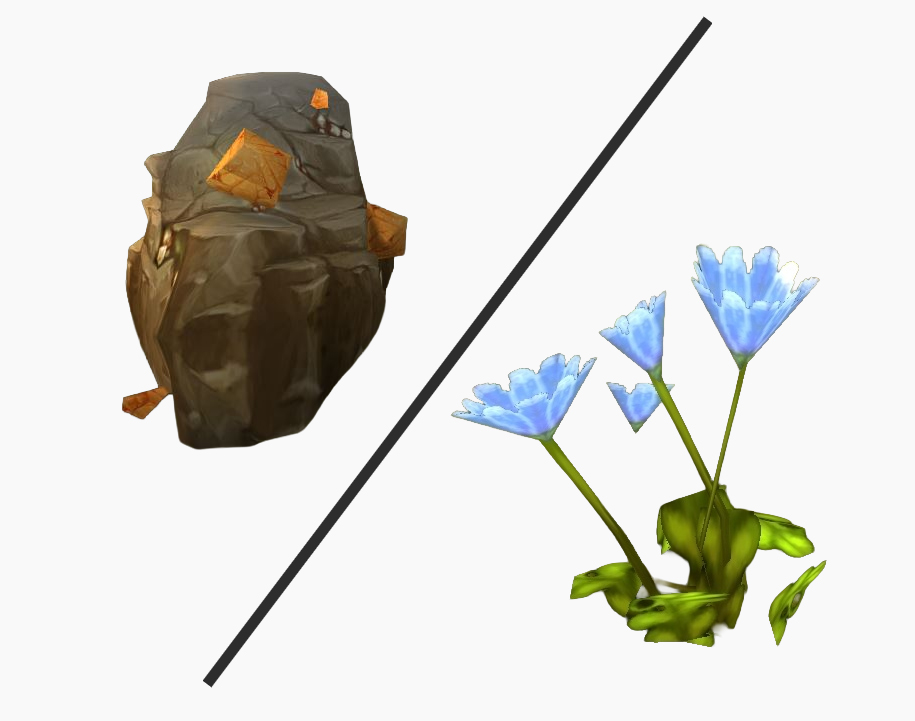
Gather Everything While You Level
For a first character, Mining and Herbalism are the most straightforward money-making pair. Both professions turn time spent traveling into materials that Blacksmiths, Engineers, Alchemists and other crafters need.
The method works best when gathering becomes part of a route you were already taking. Pick herbs between quest objectives, make a short detour for nearby ore and sell the surplus when you return to town. The income feels modest on each individual node, yet dozens of small sales accumulate while your character gains levels at the same time.
WoW Forever still uses separate tracking for herbs and ore, so running both professions requires switching between the two tracking abilities. Players who find that cumbersome can pair either Mining or Herbalism with Skinning. The convenience loss is real, but two gathering professions remain difficult to beat for a first character that wants income without financing a crafting profession.
Skinning: Turn Other Players' Kills Into Gold

Easy Income With Almost No Detours
Skinning is wonderfully prosaic: beasts are already dying around quest hubs, and their corpses become an extra source of leather. This makes it especially comfortable during the first twenty or thirty levels, when a player may care more about affording training and bags than building a sophisticated Auction House operation.
Ordinary leather can be sold to Leatherworkers or used as emergency vendor income during the first days of a fresh economy. The more interesting prize is the new family of Scarce skinning materials, which feed a large number of Forever profession recipes.
Farm Scarce Materials: The New Profession Bottleneck
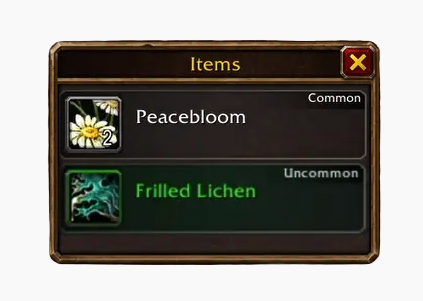
Rare Side Drops From Normal Gathering
Forever adds Scarce materials to Mining, Herbalism and Skinning. These are occasional bonus reagents obtained while gathering ordinary resources, and many of the new profession recipes depend on them. Early examples include Pyrite from Mining, Frilled Lichen from Herbalism and Pristine Leather from Skinning.
Higher profession ranges add further materials such as Bauxite, Pitchblende, Rosecap, Stranglevine, Pristine Hide and Pristine Scale. Their exact market hierarchy will shift after launch, but the economic principle is sturdy: a reagent used by several desirable recipes can command a premium long after common ore or leather becomes plentiful.
This is also where the Bountiful Harvest Legacy perk becomes useful. Investing in it increases the amount of Scarce materials discovered through Mining, Herbalism and Skinning, reaching a 100% increase at maximum rank. A gathering-focused character can therefore improve the valuable part of each route without changing professions.
Waylaid Crate Materials: Farm What Other Players Need to Turn In
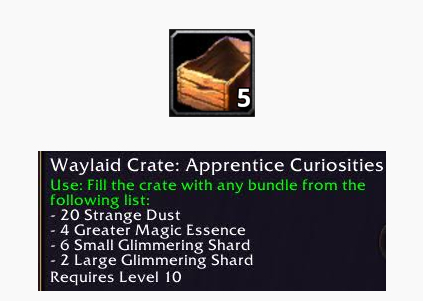
Turn Merchant's Favor Into Material Demand
One of Forever's more interesting markets comes from Waylaid Crates. Players turn these crates in to the Azeroth Commerce Authority or Durotar Supply and Logistics for Merchant's Favor, which unlocks profession recipes and other rewards. Each crate asks for a specific bundle of trade goods, so ordinary materials can suddenly have an extra buyer beyond the profession that normally consumes them.
An Apprentice Ore crate, for example, can be completed with 20 Copper Ore or 20 Tin Ore. Apprentice Herb crates accept bundles such as Peacebloom, Silverleaf, Earthroot, Mageroyal or Briarthorn. Higher tiers move into materials such as Stranglekelp, Kingsblood, Sungrass, Ghost Mushroom, Truesilver, Thorium and Dark Iron.
The clever play is to watch the cheapest acceptable substitute inside each crate. If everyone farms Copper but Tin supply dries up, the market can swing. The same thing can happen with herbs when one option grows in an inconvenient zone while another becomes heavily farmed. You are selling a solution to a turn-in requirement, which can keep low- and mid-level materials relevant well after the first leveling wave.
Alchemy: Sell Items Players Consume Repeatedly
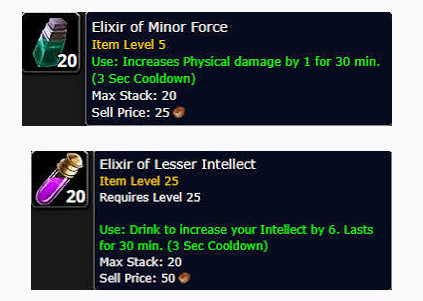
Potions and Elixirs Create Repeat Customers
Crafted gear has a simple weakness as a business: a customer buys one piece and leaves. Alchemy sells products that disappear when used. Health and Mana Potions, combat elixirs, utility consumables and later raid preparations create repeat demand every time players quest, run dungeons, PvP or raid.
Forever expands the Alchemy recipe list with new consumables and profession-faction recipes, giving the market more depth than Vanilla had at comparable levels. Herbalism is the natural partner because it lowers your material costs and gives you the option to sell raw herbs whenever potion margins become thin.
Do the arithmetic before mass crafting. Self-gathered herbs still have an Auction House value, so a potion is profitable only when its selling price exceeds the value of the materials used to make it. Sometimes the humbler choice, selling the herbs, wins.
Fishing + Cooking: A Secondary-Profession Side Business
Make Gold Without Using a Primary Profession Slot
Fishing and Cooking are attractive because every character can learn them alongside two primary professions. Fish can be sold raw to cooks, or converted into buff food when the finished meal carries a better margin.
Forever gives cooked food extra relevance while leveling: most useful foods grant a 5% experience bonus from kills through the Well Fed effect, alongside their normal combat benefits. The buff lasts for a limited period, creating continuous demand among players who want to keep it active during questing and dungeon sessions.
Useful fish tied to stat food should remain more attractive than random catches with little crafting demand. As the economy matures, raid food and sought-after recipes become another market. Fishing also requires very little upfront investment. While most players are focused on rushing to level 60 as quickly as possible, spending a bit of time fishing during the leveling process can pay off later.
Tailoring: Bags Are Often Better Business Than Gear
Sell Something Every Character Wants Several Times
Tailoring has one perennial advantage: bags. A single character needs several of them, larger bags replace smaller ones, and every new alt creates another customer. Forever also expands the category with reagent bags, adding another practical reason for players to visit the Auction House.
Cloth gear can still produce profitable windows, especially when a crafted piece fills an awkward leveling slot. Bags are generally easier to understand as a market because their usefulness crosses class boundaries and survives longer than most leveling equipment.
Cloth comes naturally from humanoids, so a Tailor can build stock while questing. Check cloth prices before crafting large batches. A sudden rush of players leveling Tailoring can make raw cloth surprisingly valuable on its own.
Farm Recipe Bottlenecks, Not Random Materials
The most valuable reagent is often the one sitting in the middle of a popular crafting chain. A material can become lucrative because several recipes consume it in bulk, multiple professions compete for the same supply, or its farming route is sufficiently inconvenient that most players simply buy it.
Alchemy creates recurring demand for potion and elixir ingredients. As players approach endgame, herbs connected to combat consumables deserve special attention.
Heavy Thorium feeds new endgame crafting, while Legionite currently comes through Alchemy transmutation from Heavy Thorium Bars. That creates demand from miners, alchemists and the crafting professions waiting at the other end of the chain.
Pyrite, Frilled Lichen and Pristine materials already appear throughout new crafting recipes. Their higher-tier relatives may become strong bottlenecks if supply remains limited.
Supply crates and profession factions create another source of demand for ordinary crafting goods. Materials that look pedestrian can spike when many players need the same crate turn-in or recipe progression.
Enchanting Services and Disenchant Arbitrage

Make the Friction Work in Your Favor
Enchanting is awkward in Forever because enchants currently rely on direct player interaction. There are no vellums in the Beta, so an Enchanter with useful formulas earns through Trade Chat, tips and repeat customers. That inconvenience creates a real opening for somebody who enjoys the social side of the economy and can respond quickly when players ask for a service.
The second angle is disenchant arbitrage. Cheap green items can be worth more as dust, essences or shards than as equipment. Scan low-priced greens, compare their cost with the current value of the likely enchanting materials, and buy only when the margin leaves room for unlucky results.
Rare or gated formulas make the service side more attractive because fewer competitors can answer every request. The market is laborious, though; current Beta players already report Trade Chat packed with Enchanting advertisements, so this suits an active seller far better than somebody looking for passive Auction House income.
Use the Legacy System for Better Gathering
Forever's Legacy System gives profession-focused characters several useful perks. Bountiful Harvest is the obvious gold-making choice because it improves Scarce material gains from Mining, Herbalism and Skinning. Working Overtime helps profession skill progression, while Bartering reduces vendor prices and preserves more of your gold over a long leveling journey.
The system is account-wide at the point-earning level, while each character spends its available points separately. That makes specialized gathering alts especially appealing later: one character can lean into profession perks while another spends points on a different part of the Legacy tree.
Best Gold Making Methods at a Glance
| Method | Investment | Consistency | Best Window |
|---|---|---|---|
| Mining + Herbalism | Very Low | Very High | Launch / Leveling |
| Skinning | Very Low | High | Early Leveling |
| Waylaid Crate Materials | Low | High | Profession Progression |
| Scarce Materials | Low | Medium-High | Whole Game |
| Alchemy | Medium | High | Dungeons / Raids |
| Fishing + Cooking | Very Low | Medium-High | Leveling / Endgame |
| Tailoring Bags | Low-Medium | High | Launch / Alt Waves |
| Cross-Faction Recipe Flipping | Low-Medium | Medium | Market Gaps |
| Enchanting Services / Disenchanting | Medium | Medium-High | Busy Trade Hours |
Final Thoughts
WoW Forever gold making starts with a very simple advantage: produce something other players need while keeping your own costs low. Gathering professions excel at launch because every ore vein, herb and skin has a buyer somewhere in the profession ecosystem. Scarce materials add an occasional windfall, while consumables, food and bags create healthier long-term markets once players accumulate more spending money.
A fresh economy will change quickly. The best material in week one may become commonplace in week three, while a humble herb or ore can jump in value because it fills a Waylaid Crate or sits inside a newly popular recipe. Recipe access, Merchant's Favor and cross-faction inconvenience create markets that did not exist in ordinary Vanilla.
For a first character, gathering remains the safest foundation. Once some capital builds up, the more interesting money comes from spotting bottlenecks: crate turn-ins, scarce reagents, faction recipes, consumable demand and underpriced items that can be converted into something more valuable.
World of Warcraft and World of Warcraft: Forever are trademarks and intellectual property of Blizzard Entertainment.